Starting today the law library will no longer be posting to this page. For the latest updates and postings visit our website and our Facebook, Twitter and Instagram pages.
Sep 172015
Senior Public Services Student Assistant Level IV
Contact: Kathy Hartman
Keh7@cornell.edu
Summary description:
Works independently at the circulation service desk assisting patrons and performing a variety of library tasks including assisting with legal research projects assigned by law librarians. Has primary evening responsibility of the circulation desk with Evening Supervisor available as back-up.
Specific duties:
1. Charge out, renew and discharge library material, including items on the library hold shelf as well as material in the Reserve and Course reserve collection.
2. Explains routine policies and procedures to patrons, answers directional and miscellaneous questions about the library.
3. Assist the References Librarians by working through lawyering problems for the 1L Lawyering classes and other legal research projects as assigned.
4. Responsible for closing the main reading room and making sure that only members of the law school community have access after hours.
5. Helps with routine clerical assignments and possibly loose-leaf filing.
Required qualifications:
1. Strong public services orientation and ability to work effectively with a wide variety of people.
2. 2L or 3L (preference given to 2Ls)
3. Must be self-directed.
4. Strong work ethic and dependability.
Hours: Sunday –Thursday 6:30-8PM. Possibly 1-2 additional hours between 9-5 weekdays. Total will not exceed 10 hours per week.
Wage: Starting $10.75 commensurate with experience.
Jun 222015
Every month the Cornell Law Library adds new titles to its collection. The most recent additions for June 2015 are posted, here. A few highlights from this month’s additions are featured below.
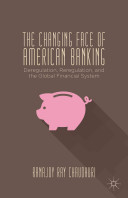
The Changing Face of American Banking – Ranajoy Ray Chaudhuri
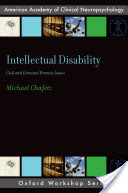
Intellectual Disability: Civil and Criminal Forensic Issues – Michael Chafetz
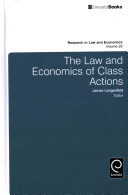
The Law and Economics of Class Actions – Edited by James Langenfeld
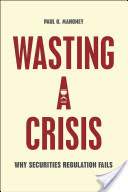
Every month the Cornell Law Library adds new titles to its collection. The most recent additions for May 2015 are posted, here. A few highlights from this month’s additions are featured below.
Wasting a Crisis:
Why Securities Regulation Fails – Paul G. Mahoney
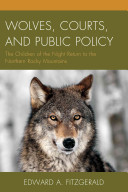
Wolves, Courts, and Public Policy – Edward A. Fitzgerald
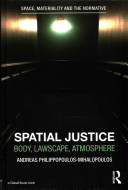
Spatial Justice: Body, Lawscape, Atmosphere – Andreas Philippopoulos-Mihalopoulos
The Cornell Law Library is pleased to announce the 2015 recipients of The Cornell Law Library Robert Cantwell Prize for Exemplary Student Research:
First Prize:
“Nobody’s Saying We’re Opposed to Complying”: Barriers to University Compliance with VAWA and Title IX, by Charlotte Savino, 2L
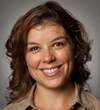 Charlotte Savino researched a complex array of historical and contemporary sources to take on the timely topic of sexual assault on college campuses.
Savino examined potential barriers university administrators face complying with federal sexual assault legislation such as the Violence Against Women Act (VAWA) and Title IX. She synthesized a trove of legislative, administrative and judicial sources to examine federal government’s efforts to address sexual assault on the national level and the potential logistical and legal barriers those efforts present to universities seeking to comply. Building on that analysis, Savino explored the current political climate’s impact on future legislation and the financial and legal consequences of universities’ action or inaction in addressing sexual assault.
Most rewardingly, Savino explained that her research facilitated a deeper understanding of administrative and education law. “I am most proud of how this research prepared me to have meaningful and insightful discussions with the policymakers at Cornell who are doing the same kind of research and coordination among government guidance documents and regulations,” she said.
Second Prize:
Don’t Forget About the Jury: Advice for Civil Litigators and Criminal Prosecutors on Differences in State and Federal Courts in New York, by Ariel Atlas, 2L
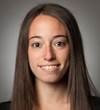 Ariel Atlas’ research involved statistical analysis of whether or not there are appreciable differences between state and federal juries in New York.
Atlas’ approach required developing a diverse collection of traditional legal and interdisciplinary sources, including United States Census Bureau census data (available on a county-level, and then aggregated to match the four federal New York district courts), New York state jury statistics, jury procedures and case law addressing challenges to the constitutional right of a fair trial, as well as scholarly literature.
She used her research to test her hypothesis that there are considerable demographic differences between the county/state and the federal courts in New York. Ultimately, she concludes that “the jury afforded to a criminal defendant differs depending on the type of crime—state or federal—that the defendant commits” (pp. 24-25), while in civil cases differences in the jury pool between state and federal courts vary from county to county.
About the Cantwell Prize:
A review panel comprised of Librarians Amy Emerson, Matt Morrison, Nina Scholtz, and Mark Williams selected the winners from among 14 competitive entries.
Funding for the Prize is provided by an endowment given to the Law Library by Barbara Cantwell in honor of her late husband, Robert Cantwell, a 1956 graduate of Cornell Law School.
In addition to receiving a monetary award, the winners are invited to publish their papers in Scholarship@Cornell Law, the Law Library’s digital repository, and to feature their papers in Reading Room displays.
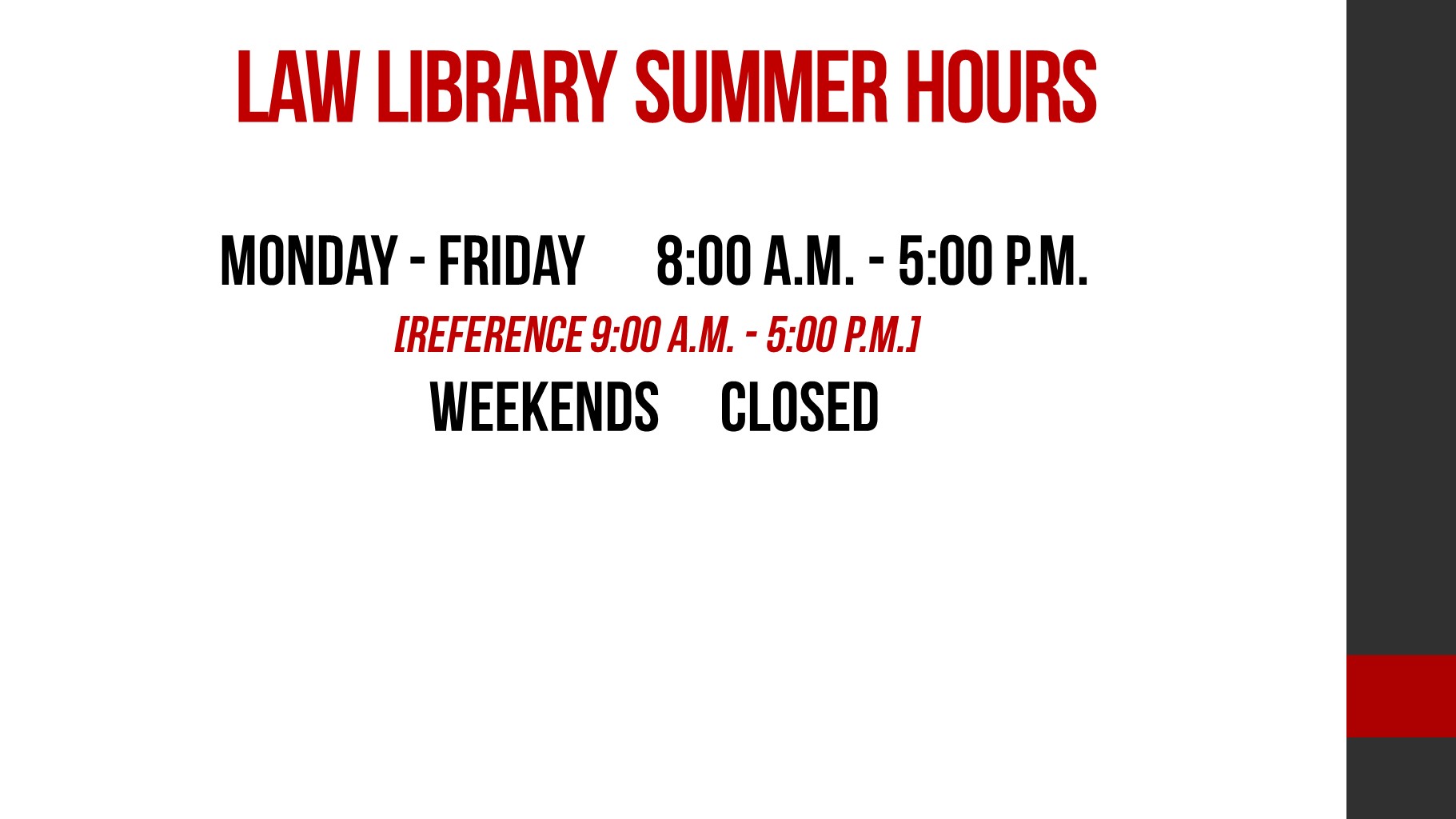
The exam period has arrived and access to the Law Library will be restricted from Wednesday, April 29, through Tuesday, May 12. During restricted access periods the law library is open to law school affiliates, university faculty, and non-law students conducting legal research.
The law library continues to be sensitive to the needs of the university community during exams, and non-law students who need to retrieve books or obtain research assistance are welcome to visit the library for those purposes.

Lloyd
Just a friendly reminder that it’s time for pet therapy! Stop by the Student Lounge tomorrow, April 28, from Noon-1pm, to unwind with therapy dogs and a llama.
This is also the perfect opportunity to enter a drawing to win Lloyd the Llama, pictured to the right.
No RSVP required.
This event is co-hosted by the Cornell Law Library and Cornell Companions.
Every month the Cornell Law Library adds new titles to its collection. The most recent additions for February 2015 are posted, here. A few highlights from this month’s additions are featured below.
The First Amendment Bubble:
How Privacy and Paparazzi Threaten a Free Press – Amy Gajda
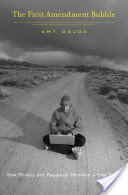
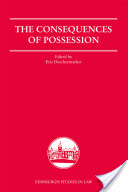
The Consequences of Possession – Edited by Eric Descheemaeker
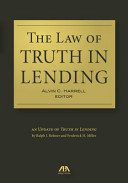
The Law of Truth in Lending – Edited by Alvin C. Harrell